“Ageing Gracefully”
Mastering Artificial Ageing in Aluminium Extrusion Heat Treatment

Artificial age hardening
In aluminium heat treatment understanding and control of the product heating step is critical to the quality of the final aluminium product being manufactured or processed. This definitely applies in the manufacture of aluminium extrusions where the product goes through a series of important unique heating operations.
As discussed in a previous article [1] the aluminium billet / log, starting material of the aluminium extrusion, requires carefully controlled heat treatment itself for which purpose designed PhoenixTM monitoring systems have been developed. In the extrusion process the billet is further heated to the required solution heat treat temperature, extruded and quenched. The rapid cooling/quenching step, typically in water, results in a supersaturated solid solution and provides the driving force for precipitation within the aluminium structure. The precipitation hardening is promoted by a further ageing process. Ageing can be achieved by two methods either natural or artificial. Natural ageing is performed at room temperature and artificial ageing is performed at a controlled elevated temperature (95 -205 °C) in an oven (typically 4 – 8 hours).
Although the last heat treatment step in the process artificial ageing of the aluminium extrusion is critical to the final mechanical properties of the material and characteristics such as tensile and yield strength, hardness and ductility. The actual ageing parameters (heat treat temperature and soak time) are characterised by the specific aluminium alloy being used. Different alloys such as the 6XXX (Al-Mg-Si), 7XXX (Al-Zn-Mg-Cr) series will have their own specific ageing criteria as referenced in quality standards such as AMS2770R.[2]
The Temperature Monitoring Challenge
In principle the artificial age hardening process from a technical perspective doesn’t appear to be too demanding. Compared with other heat treatment applications keeping a simple aluminium extrusion at a relatively low temperature for a few hours may seem easy but it is important to understand the potential challenges. For the ageing process temperature uniformity of the product during the soak period is demanding, typically ±5.0 °C of target temperature.
Most commonly ageing ovens are in principle large static box ovens capable of housing multiple product racks / trollies on which the long lengths of extrusion are carried. The first challenge faced is maintaining temperature uniformity over the working zone in the oven. In any heating chamber identifying hot and cold spots is critical to knowing what product heating consistency you will have. Oven balancing from both a temperature and air flow perspective is essential before even considering introducing product to eliminate the risk of product variations within batches. Later in this article the use of PhoenixTM systems designed to perform Temperature Uniformity Surveys (TUS) will be discussed for this very purpose.
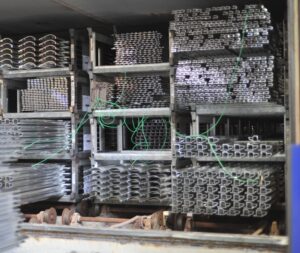
Fig 1: Typical aluminium extrusion ageing oven loaded with separate racks housing different profiles. PhoenixTM system positioned on middle rack with thermocouples running to different Key positions in the oven.
Accurate temperature control of the oven is obviously critical to maintain consistent heating characteristics.
This alone though will not guarantee the product temperature characteristics. The oven controller in most instances will inform of the air temperature in an isolated location in the oven but this may not reflect the true extrusion temperature. Remember the product after loading will have a defined temperature ramp up time to get to the designated soak temperature. This time will be significantly influenced by product loading (material weight) and possibly even product positioning or mix of different product sizes. The product trollies and racks plus the product will have a high thermal mass which needs to be heated as part of the temperature ramp up process. Doubling the load weight will significantly increase the time needed for the product to reach the soak temperature. Varying loading patterns within the oven may even change the heating characteristics and extrusion temperature at different locations as the convective air flow patterns are changed.
What is needed in principle is a system that will provide an accurate measurement of the extrusion temperature over the working volume of the oven live through the entire heat treatment process (ramp and soak). With such system full oven balancing can be achieved and during product processing, validation that the complete product batch reached and was held at the soak temperature for the prescribed time.
Thru-Process Temperature Monitoring Principle
PhoenixTM Thru-process temperature monitoring systems are designed in principle to monitor continuous or semi-continuous heat treat processes. The multi-channel data logger passes through the process protected by a thermal barrier, measuring the unique product temperature with thermocouples. The batch ageing oven in principle can be monitored using a trailing thermocouple method where the data logger is kept external to the oven and thermocouples run into the oven cavity. When monitoring large ovens, housing multiple separately loaded product trollies/racks though this approach is difficult if not impossible. Thermocouple damage and or losing connection to the product with the movement of trollies, one after the other, in sequence is a high risk.
Utilising the PhoenixTM system the monitoring system can be set-up on individual product trollies outside the Oven and wheeled in safely and efficiently. The short thermocouples are safely contained in the rack structure so at no risk during product rack loading (Fig 1).
PhoenixTM Thru-process Monitoring system
A thru-process monitoring system developed for a unique aluminium extrusion oven is shown in Figure 2.
Two identical systems were requested by an international aluminium extrusion supplier to allow monitoring of up to 40 points within the oven. The oven housed 16 product baskets (4 stacks of 4 baskets). The process specification was a 1.5-hour ramp followed by soak @ 180 °C for 8 hours.
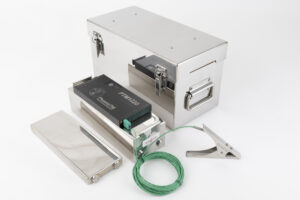
Fig 2: PhoenixTM Thru-process Temperature Monitoring System
2.1 PTM1-220, 20 Channel Data Logger (Type K) accurate to ±0.3 °C with cold junction compensation (CJC).
2.2 TS04-205-1 Aluminium Ageing Thermal Barrier with heat sink (Providing 11 hours protection of the data logger @ 200 °C) (Size 205 x 206 x 391 mm (H: W: L) Weight 15.0 kg).
2.3 Clamp surface thermocouple (Type K) with user interchangeable cable/sensor.
Data Logger
The PTM1-220-LT data logger allows the temperature measurement from 20 type K thermocouples. The data logger measures up to 500 °C with an accuracy of ±0.3 °C maintained over the operating range of the data logger (0 to 80 °C) using an accurate cold junction compensation technology. During the trial the data logger temperature will gradually increase in the thermal barrier. A change in data logger temperature (Cold Junction Reference) would conventionally cause measurement errors but with the cold junction compensation this is avoided. Offering a large 3.8 million data point memory high resolution profiles can be performed with a sample interval of down to 1 second with the application of RF telemetry methodology.
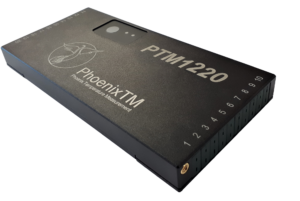
Fig 3: PhoenixTM PTM1-220-LT 20 channel Data Logger
Thermocouples
For aluminium extrusions the thermocouple of choice is the surface clamp thermocouple as shown in Figure 4. The clamp allows quick secure placement and has a user replaceable cable to reduce consumable cost long term. The robust triple wrapped PTFE cable is rated to 265 °C and gives flexible handling. The type K thermocouple is ANSI MC96.1 ‘Special Limits of Error’ with accuracy ±1.1 °C or ±0.4% reading.
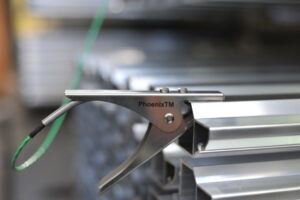
Fig 4: PhoenixTM Clamp Thermocouple securely connected to aluminium extrusion.
RF Telemetry – Real Time Data Collection
Available with a RF Telemetery option the temperature data can be transmitted direct from the oven to an external monitoring PC during the profile or temperature uniformity survey. Running Thermal View software the live data can then be reviewed in real time. The two-way RF system not only monitors temperature data recorded by the data logger but uniquely allows direct control of the data logger itself. The data logger can be reset or downloaded direct from the oven without any need to access the data logger inside the thermal barrier. Measured temperature data is transmitted direct from the data logger via a thermally insulated RF antenna exiting the barrier with the thermocouple cables. The RF signal transmitted out of the oven is then passed along a series of repeater units, if required, (‘Lwmesh’ networking protocol) back to the main coordinator connected to the monitoring PC. Seeing product temperature data live the exact moment the soak temperature is reached can be identified along with when the target soak time is achieved.
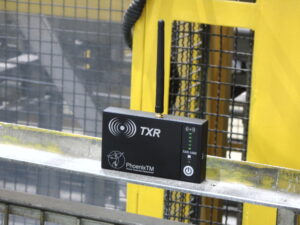
Fig 5: RF Telemetry Repeater transferring the live RF signal from the oven to the monitoring PC.
Thermal View Profile and TUS Software
To maximise the value of the temperature profile data collected from the ageing process different software options are available to address different monitoring objectives. For general product temperature profiling the software (Thermal View Plus) allows review and analysis of the product temperature profile through the heat treatment cycle to ensure that the alloy specific target ageing temperature is achieved for the required soak time. The data allows identification of hot and cold spots within the product load and optimisation of ramp up time and soak conditions. Reviewing the real time RF telemetry data the heating cycle can be finished immediately the soak time has been obtained to prevent any risk of over soak (reduce tensile strength), maximise throughput and avoid wasted energy usage.
From a monitoring perspective performing a Temperature Uniformity Survey can be demanding especially when complying to AMS2770R (AMS2750 Pyrometry). To address the TUS challenges the Thermal View Survey software has been developed to simplify the set-up of the survey, analysis and reporting.
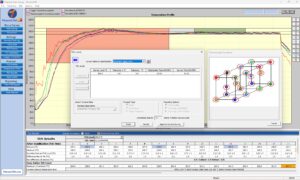
Fig 6: Thermal View Survey software providing complete implementation of Temperature Uniformity Survey (TUS) of the ageing oven to confirm that the heat treatment is within the target (example 160 °C ± 5.0 °C) to meet requirements of AMS2770R.
Figure 6 shows the temperature uniformity survey performed on an aluminium ageing oven. The 20-point survey can be shown to meet the target temperature uniformity tolerance. Developed to provide full AMS2750 pyrometry compliance, the software allows full set-up of TUS level analysis, TUS frames and Data logger / Thermocouple Correction factors with full certified traceable reporting.
Summary
To optimise the mechanical characteristics of aluminium extrusion it is important that the ageing heat treatment process is performed in a controlled fashion. Thru-process temperature profiling and temperature uniformity survey systems provide the means to understand, control and validate the heat treat operation. Combining these monitoring techniques helps maintain quality of the aluminium extrusion product and maximises the economic efficient operation of the heat treat oven.
References:
[1] Aluminium International Today Magazine Jan Feb 2024 “The Rock and Roll of Continuous furnace aluminium log homogenisation monitoring” Dr Steve Offley, PhoenixTM page 41 – 44.
[2] AMS2770R Aerospace Material Specification SAE International Issued 1974-06 Revised 2020-6 “Heat Treatment of Wrought Aluminium Alloy Parts” Table 7.